How to Get Your Comic Shop on Google: A Step-by-Step Local SEO Guide
If someone in your neighborhood searches “comic shop near me” right now, does your store show up?
For most independent comic shops, the honest answer is: not really. Maybe you’re buried on page two. Maybe your Google Business Profile has wrong hours. Maybe you don’t show up at all.
That’s a real problem, because that search — “comic shop near me” — happens thousands of times every day across the country. These are people with money in their hand, ready to buy. And right now, they’re walking into your competitor’s store instead of yours.
This guide walks you through exactly what it takes to get your comic shop showing up on Google. No fluff, no jargon — just the steps that actually move the needle for local retail stores like yours.
Step 1: Claim and Fully Optimize Your Google Business Profile
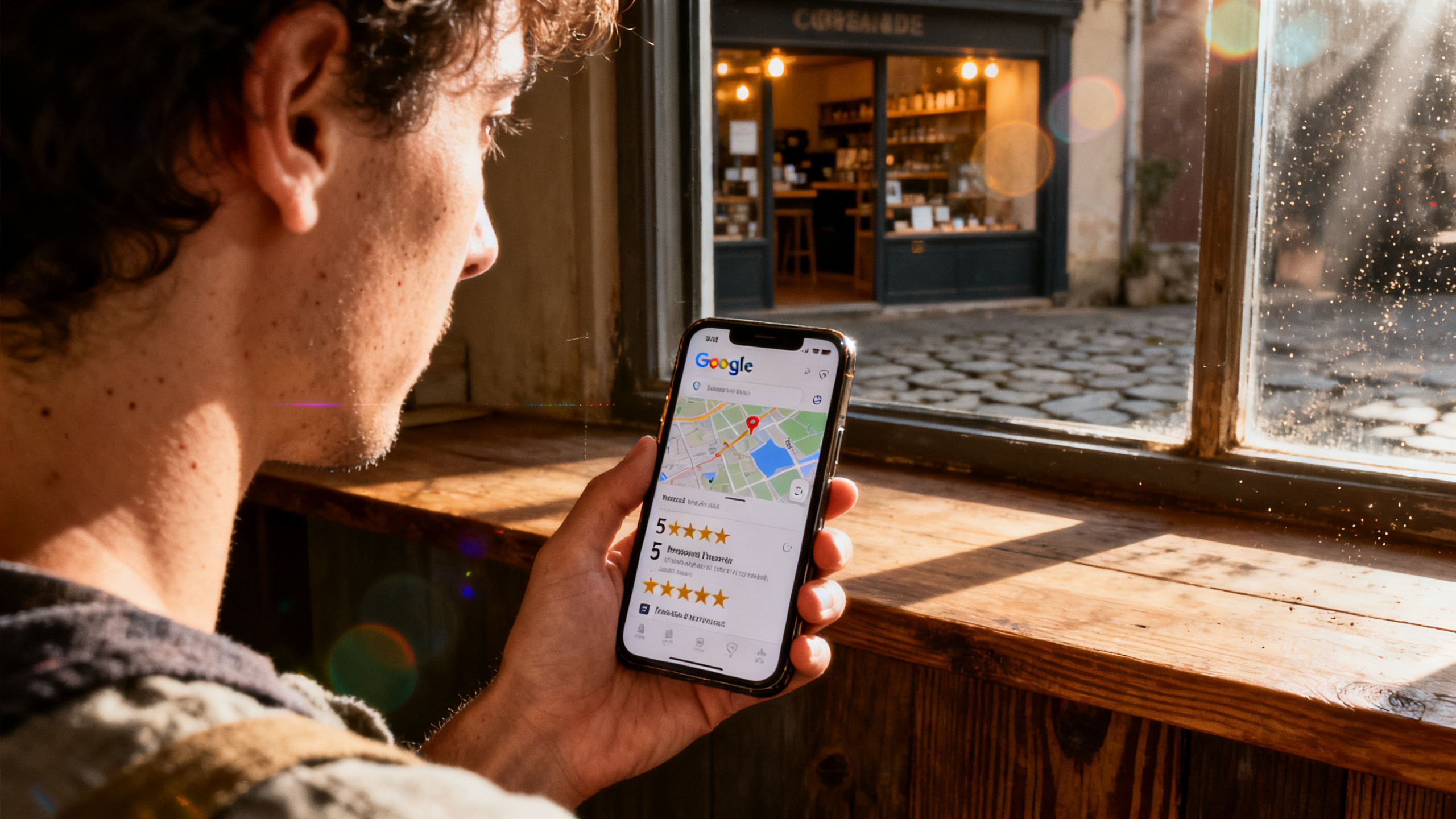
Your Google Business Profile (GBP) is the single most important factor for local search. It’s what powers the Google Map Pack — that box of three local businesses that appears at the top of search results for local queries.
If you haven’t claimed your profile yet, go to business.google.com and do it today. Then fill out every single field:
- Business name: Use your real store name — no keyword stuffing
- Category: Select “Comic Book Store” as your primary category
- Address: Make sure it matches exactly what’s on your website and any other directory listings
- Hours: Keep these updated, especially around holidays and new issue day (Wednesday)
- Phone number: Use a local number, not an 800 number
- Website: Link directly to your homepage
- Description: Write 2–3 sentences about what makes your shop special — mention your city/neighborhood
- Photos: Upload at least 10 real photos of your store, your staff, and your inventory
One thing most shop owners skip: the Products and Services sections. Add your key categories here — back issues, new releases, graphic novels, statues, gaming supplies. Google uses this data to match your profile to more searches.
Step 2: Get Your NAP Consistent Everywhere
NAP stands for Name, Address, Phone number. Google uses these three pieces of information to verify that your business is legitimate. If your name is “Cosmic Comics” on Google but “Cosmic Comics LLC” on Yelp and “Cosmic Comix” on Facebook — that inconsistency actually hurts your rankings.
Go through every directory listing you can find and make sure your NAP is identical everywhere:
- Google Business Profile
- Yelp
- Apple Maps
- Bing Places
- Yellow Pages
- Foursquare
- Your own website’s contact page and footer
This sounds tedious because it is. But it’s foundational — everything else you do for local SEO builds on top of this.
Step 3: Build a Location Page on Your Website
Your website needs a dedicated page that makes it completely obvious where you are and what you sell. This isn’t just your contact page — it’s a full location page optimized for local search.
A good location page includes:
- Your city name in the H1 heading (e.g., “Comic Book Shop in Denver, CO”)
- Your full address written out in text on the page
- An embedded Google Map
- Your hours, phone number, and a clear call to action
- A paragraph describing the neighborhoods you serve
- A few sentences about what’s unique about your store
The goal is to give Google every possible signal that you are a real, physical comic shop in a specific location — and that you deserve to show up when someone nearby is searching.
Step 4: Target the Right Keywords on Your Website
Ranking on Google isn’t just about having a website — it’s about having pages that specifically answer the questions people are searching. For a comic shop, the core keywords you want to target are:
- “comic shop near me”
- “comic book store [your city]”
- “comic books [your city]”
- “where to buy comic books [your city]”
- “graphic novels [your city]”
- “local comic shop [your city]”
These should appear naturally in your page titles, headings, and body copy. Don’t stuff them in unnaturally — write for your customers first, then make sure the keywords are present.
Also think about long-tail keywords — more specific searches like “Wednesday new releases comic shop” or “back issue comics [your city]” or “Pokémon cards near me.” These get less traffic individually, but they’re often easier to rank for and convert at a higher rate because the searcher knows exactly what they want.
Step 5: Get More Google Reviews (and Respond to All of Them)
Reviews are one of the most powerful ranking factors for local search. The shops that dominate the Map Pack almost always have significantly more reviews than their competitors — and better ratings.
The most effective way to get reviews is the simplest: just ask. Train yourself and your staff to say something like: “Hey, if you enjoyed your visit, we’d really appreciate a Google review — it helps people find us.” You can even print a small card with a QR code that links directly to your review page.
A few things to keep in mind:
- Never offer incentives for reviews — Google prohibits this and can penalize you
- Respond to every review, positive and negative
- When responding to negative reviews, stay professional and offer to make it right
- Reviews with keywords in them (like “best comic shop in Chicago”) carry extra weight
Aim to get at least one new review per week. Consistency matters more than a sudden burst.
Step 6: Create Content That Attracts Local Customers
The shops that rank best in local search aren’t just listed on Google — they’re actively publishing content that brings customers in. This doesn’t have to be complicated.
Some content ideas that work well for comic shops:
- “This Week’s New Releases” posts every Wednesday
- Staff pick articles (“Our Top 5 Graphic Novels for New Readers”)
- Event announcements (Free Comic Book Day, signing events, game nights)
- Blog posts answering common customer questions
- Local interest pieces (“Why Our City Has Such a Great Comic Book Scene”)
Every piece of content you publish is another page Google can index, another keyword you can rank for, and another reason for a customer to visit your site — and then your store.
How Long Does This Take to Work?
Local SEO is not instant. Most shops start seeing movement in 60–90 days, with more significant results appearing at the 4–6 month mark. The good news is that once you’re ranking, you tend to stay there — especially in smaller or mid-size markets where the competition isn’t doing much.
The shops that get frustrated and give up are usually the ones who expected results in two weeks. The shops that stick with it consistently are the ones we see go from invisible to dominating their local market.
Want Help Doing This For Your Shop?
We’re Nostalgik Brands — a digital marketing agency that works exclusively with nostalgia-driven indie retailers: comic shops, record stores, toy stores, hobby shops. We built our own niche retail business from scratch before pivoting to help other shop owners do the same.
If you’d rather spend your time running your shop than figuring out Google algorithms, we can handle all of this for you. Start with a free audit — we’ll take a look at where you stand and tell you exactly what needs to happen to get you ranking.
Or if you’re curious about what results look like for a real shop, check out our Nostalgik Vibes case study.
📌 Want a done-for-you approach? Check out our SEO for Comic Shops services page to see exactly how we rank local shops — and what results you can realistically expect.