There’s a reason certain businesses built around the past are thriving right now. Vinyl record stores. Retro toy shops. Comic book stores. Vintage clothing boutiques. Hobby shops carrying the same model kits they sold in 1978. These businesses aren’t surviving despite nostalgia — they’re succeeding because of it, and the ones doing it deliberately are pulling ahead of the ones doing it by accident.
This is nostalgia marketing: using the emotional power of the past as a genuine business strategy. Done well, it’s one of the most effective tools available to an indie retailer. Done poorly, it’s just aesthetic cosplay that doesn’t convert. This guide covers the difference.
Why Nostalgia Works So Powerfully
Nostalgia isn’t simply about old things. It’s about identity, belonging, and meaning. When someone buys a record they loved as a teenager, they’re not just buying music — they’re reclaiming a version of themselves, reconnecting with a time when things felt a certain way, participating in something that has personal significance beyond its face value.
Research in consumer psychology consistently shows that nostalgia increases willingness to pay, reduces price sensitivity, strengthens brand loyalty, and drives word-of-mouth sharing. When a purchase is emotionally meaningful, people treat it differently than a commodity transaction — and they talk about it.
For indie retailers, this is a profound advantage over Amazon and big-box competitors. You’re not selling products. You’re selling meaning. The products are just the medium.
The Three Layers of Nostalgia Marketing
Effective nostalgia marketing operates on three layers simultaneously: product, experience, and story. Shops that work all three layers build something that’s genuinely hard to compete with.
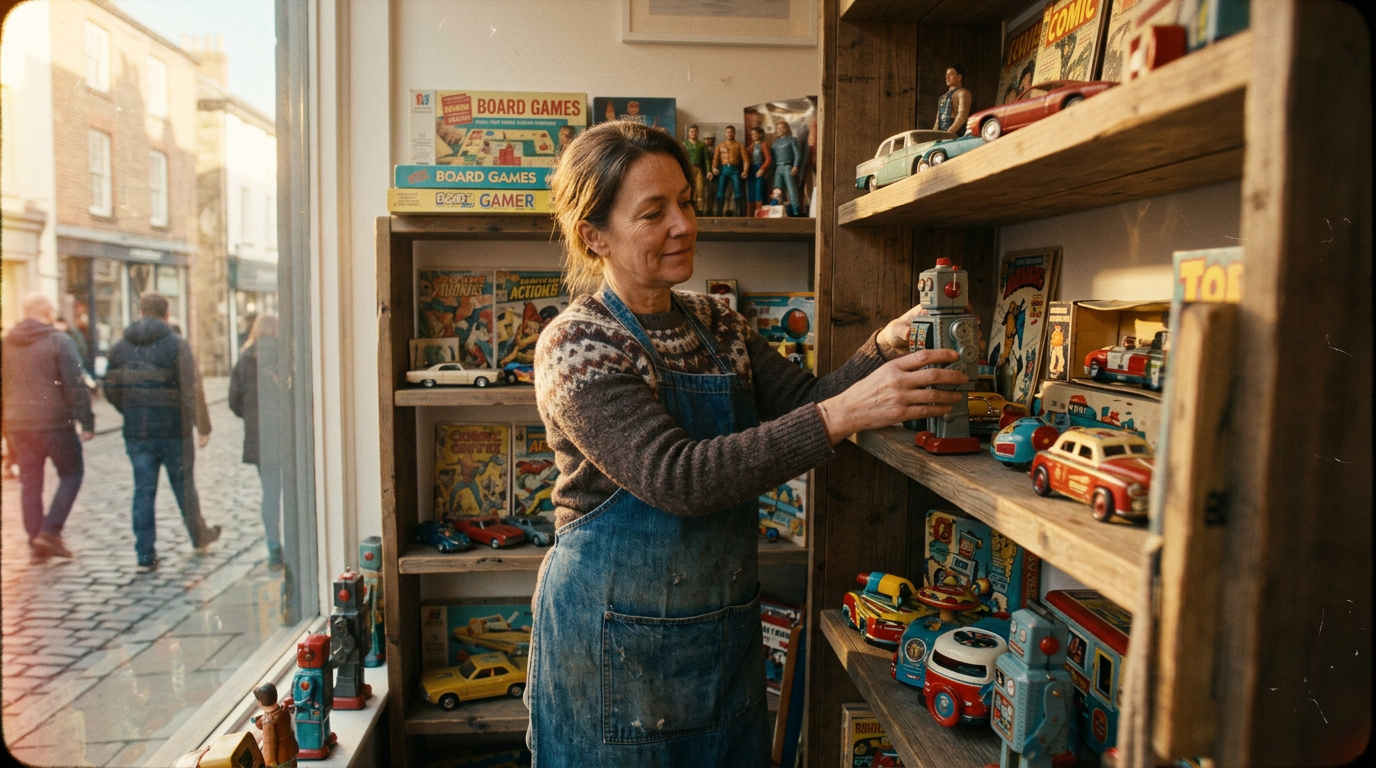
Product: What you carry. The curation itself is a nostalgia statement. A record store that specializes in original pressings from the 60s and 70s is communicating something different than one that focuses on new releases. A toy shop organized around specific decades signals to the right customers that this place was made for them. Intentional curation — and communicating what you’re curating and why — is the foundation.
Experience: How the shop feels. Physical retail is one of the few places where sensory experience is still a genuine differentiator. The smell of old paper. The sound of vinyl playing over the speakers. The weight of a well-made toy in your hands. Display cases that feel like discoveries. Staff who know the history of what they’re selling. None of this is available online, and all of it is part of the product you’re selling.
Story: What you communicate — in your marketing, your social media, your website, your in-store signage. The story is how you tell customers why this matters, who this is for, and what they’re participating in when they choose your shop. It’s the difference between “we sell vintage toys” and “we’re the place where the things you loved as a kid are taken seriously.”
Common Mistakes in Nostalgia Marketing
Leaning on aesthetic without substance. Sepia-toned Instagram filters and retro fonts don’t make a nostalgia brand. The product, the expertise, and the genuine passion have to be real. Customers who care about these categories are knowledgeable — they can tell the difference between a shop that loves what it sells and one that’s cosplaying vintage for the trend.
Speaking only to existing customers. The shops with the most sustainable growth are the ones that treat nostalgia as a bridge — using it to welcome new customers who are discovering these categories for the first time, not just as a signal to existing collectors. Your content, your website, your signage should speak to both the veteran and the newcomer.
Ignoring the online presence. The irony of nostalgia retail is that the customers are modern people living modern lives. They find you on Google, they read your reviews, they look at your Instagram before they visit. A shop with a genuinely great physical experience and a neglected digital presence is losing a significant percentage of potential customers who never make it through the door because they couldn’t find a good reason to come.
Building the Nostalgia Brand That Compounds Over Time
The most successful nostalgia retailers aren’t just selling products — they’re building a community with a shared identity. That community, once built, becomes self-sustaining: members recruit new members, create content about the shop, advocate for it online, and show up reliably even when they don’t need to buy anything.
Building that community requires consistency over time. It requires showing up with genuine expertise and enthusiasm, not just when it’s convenient. It requires treating the shop as a cultural institution for a specific community, not just a retail location.
The marketing that supports this is less about promotion and more about documentation. Show the culture. Share the knowledge. Tell the stories. Let the people who care find their way to you because your content demonstrates that you’re the real thing.
Making the Nostalgia Brand Findable
All of this is undermined if potential customers can’t find you. Nostalgia retail is location-dependent — the experience you’re selling is physical. That means local SEO is essential: showing up in Google Maps when someone searches “record store near me,” having a website that communicates your niche and expertise, building enough online presence that a new customer can confidently decide to make the trip.
We work exclusively with nostalgia-driven indie retailers — it’s our specific niche because we believe in the category and know what makes it work. If you want help making your shop more findable by the customers who would love it, start with our free audit.
Or learn more about our approach on our Digital Marketing for Indie Retailers page.