Record stores are back. Vinyl sales have grown for 17 consecutive years. Younger listeners who’ve never owned a turntable are walking into shops and spending real money. The demand is there.
But here’s what most record store owners are missing: most of that demand starts on Google. Someone new to town, or someone who just bought their first turntable, or someone looking for a specific pressing they can’t find online — they all type “record store near me” into their phone first.
If your shop isn’t showing up for that search, you’re invisible to some of your best potential customers. This guide covers local SEO specifically for independent record stores — what actually works, and why the generic marketing advice doesn’t apply to you.
Why Local SEO Hits Different for Record Stores
Record stores have a search advantage that most retail categories don’t: they serve an extremely passionate community of people who are actively looking for exactly what you have.
Vinyl collectors are not casual shoppers. When they search for a record store, they’re not browsing — they’re on a mission. They want to dig through your bins. They want to know if you carry jazz, or hip-hop, or classic rock, or Japanese pressings. They want to know if you do buybacks.
That specificity is your opportunity. If your local SEO is set up right, you can rank not just for “record store near me” but for “jazz vinyl [your city],” “first pressings [your city],” “vinyl buyback near me,” and dozens of other high-intent searches that your competitors probably aren’t even trying for.
Google Business Profile: The Foundation
Everything starts with your Google Business Profile (GBP). This is what controls how you appear in Google Maps and the local results that show up when someone searches for a record store near them.
For record stores specifically, here’s what matters most:
- Primary category: “Record Store” — make sure this is your main category, not a secondary one
- Secondary categories: Add “Music Store,” “Used CD Store,” or “Vinyl Record Store” as appropriate
- Description: Mention your specialty genres in the description — Google reads this and uses it to match searches
- Products: Add your vinyl genres and key product types as products/services
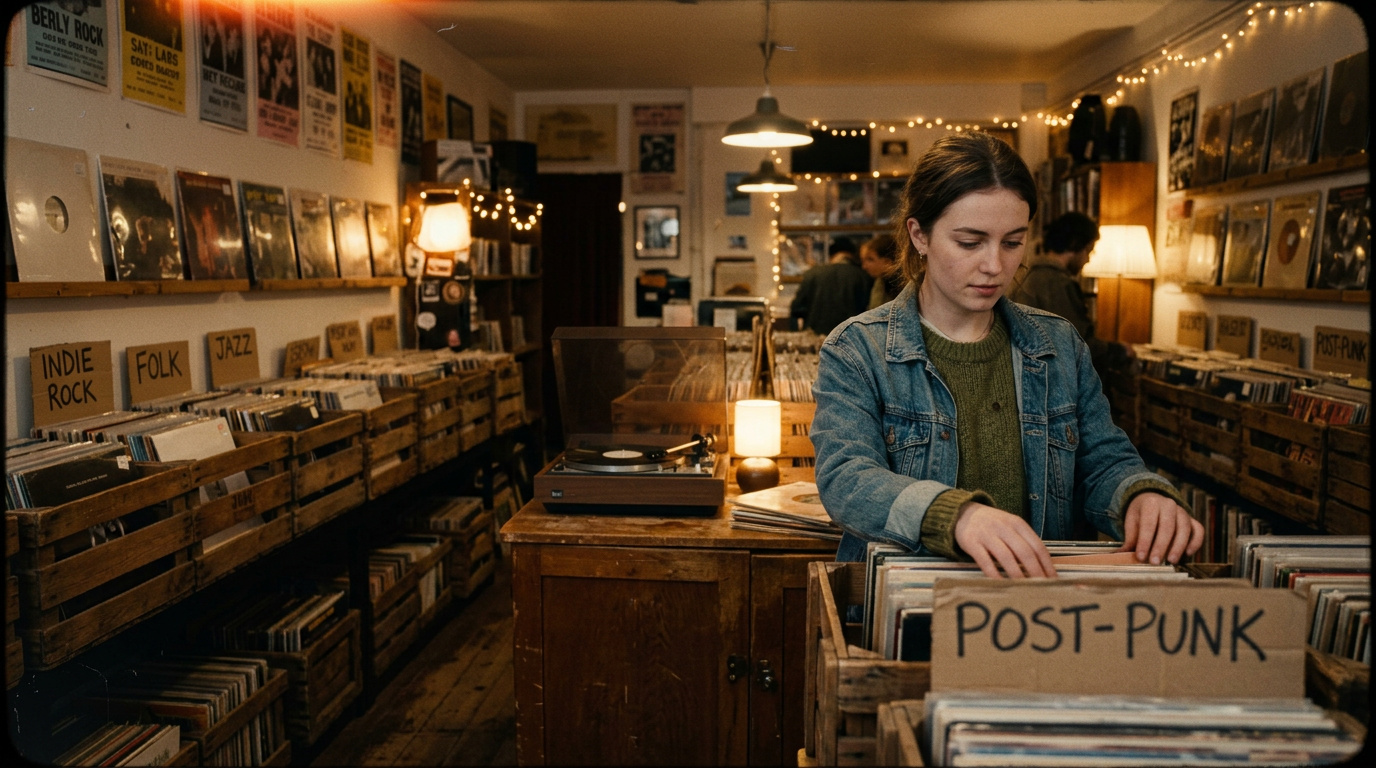
- Photos: Upload photos of your bins, your staff picks wall, your listening station — the stuff that makes a record store feel like a record store
- Posts: Use GBP posts to announce new arrivals, Record Store Day events, buy/sell/trade days
Record Store Day is also a major SEO opportunity that most stores don’t leverage. In the weeks leading up to RSD, search volume for terms like “Record Store Day near me” and “Record Store Day [your city]” spikes dramatically. If you publish a page or post about your RSD event 4–6 weeks in advance, you can rank for those searches and drive real foot traffic.
The Keywords That Actually Bring Customers In
Most record store owners think about SEO in the broadest terms: “record store near me.” That’s important, but it’s also the most competitive keyword. Here’s where the real opportunity is:
- “vinyl record store [city]” — high intent, local modifier makes it more specific
- “used vinyl [city]” — people specifically looking for used records, which is your margin
- “[genre] vinyl [city]” — jazz vinyl Denver, hip hop vinyl Nashville, etc.
- “record store that buys records near me” — people trying to sell their collection
- “Record Store Day [city] [year]” — seasonal but hugely valuable
- “first pressing vinyl [city]” — serious collectors searching for specific quality
- “vinyl cleaning service [city]” — if you offer this, it’s low competition and high value
The approach is to build individual pages or blog posts that specifically target the variations most relevant to your shop. Not all at once — pick the two or three that fit best and start there.
The Content Strategy That Actually Works for Record Stores
Record stores have a natural content advantage: the stories. Every shop has them. The copy that came in from a retired DJ’s collection. The original pressing of Kind of Blue that someone brought in thinking it was worth a few bucks. The customer who’s been coming in every Saturday for 22 years.
Google rewards content that demonstrates genuine expertise and community connection — what’s sometimes called E-E-A-T (Experience, Expertise, Authoritativeness, Trust). A record store that publishes real, specific content about music is going to outrank a generic music retailer that publishes marketing fluff every time.
Content ideas that work well for record stores:
- “Staff Picks” posts — what your team is listening to and why
- Genre guides written for your specific customer base
- “What to Look for When Buying Used Vinyl” — a perennial search query
- Event recaps (Record Store Day, in-store performances, listening parties)
- Local music scene coverage — bands from your city, local label releases
- “How to Care for Your Vinyl Records” — evergreen, high-search-volume
- Buying guides for first-time vinyl buyers
You don’t need to publish every week. Two or three solid pieces per month, written with genuine knowledge and voice, will outperform daily thin content every time.
Reviews: How to Get More and Why They Matter
Record store customers are talkers. They tell their friends about the shop they found. They post their hauls on Instagram. That same energy, directed at Google reviews, is incredibly powerful for your local rankings.
The ask is simple: when someone’s clearly had a great experience — found something rare, had a good conversation with your staff, got a great deal on a buyback — that’s your moment. “Hey, if you get a chance, a Google review would really help us out. I can send you the link if you want.”
A QR code by the register that goes to your Google review page works surprisingly well, especially for customers who are already on their phones taking a photo of their purchase.
Respond to every review. Not with a template — with something specific. “Glad you found that Coltrane pressing — that one came in last Tuesday and we knew it was special.” That kind of response shows Google (and future customers) that there’s a real person running a real shop.
How Long Until You See Results?
Realistically, 60–90 days to start seeing movement, 4–6 months for meaningful impact. The exact timeline depends on how competitive your local market is — a record store in a small city has an easier path than one in a major market with five competitors.
The stores that see the best results are the ones that do the basics right (GBP, consistent NAP, a solid website) and then stay consistent with content and review generation. It’s not glamorous, but it works.
Want Someone to Handle This For You?
We’re Nostalgik Brands — a digital marketing agency that works exclusively with nostalgia-driven indie retailers. We built our own niche retail business before pivoting to help other shop owners do the same thing.
If you’d rather be running your shop than figuring out Google, we can take all of this off your plate. Start with a free audit — we’ll look at your current online presence and tell you exactly where the gaps are.
Or see how we did it ourselves with the Nostalgik Vibes case study.
📌 Ready to go beyond SEO? Our Digital Marketing for Indie Retailers page covers the full picture — from local visibility to eCommerce and social media.